
Circular Business Design School Kyoto, a business development program that Artiql runs under commission from the City of Kyoto, will hold its final presentation and networking event on December 19 at KOIN (Kyoto Economic Center). Twelve participating teams from the Advanced Course are scheduled to pitch their business ideas, and Part 1, the final presentation session, will also be streamed online.
Circular ideas shaping Kyoto’s future come together
Since fiscal year (FY) 2025, the City of Kyoto has been running Circular Business Design School Kyoto, a business development program for local businesses and other organizations, to support the shift to the circular economy, an economic model that keeps resources in use efficiently and sustainably while creating added value.
Under the concept “Decode Culture, Design Future: Unraveling wisdom, crafting innovation,” the program has worked to create circular businesses by combining the circular wisdom rooted in Kyoto’s history and culture with leading circular economy thinking from Japan and abroad.
The program consists of the Basic Course, which covers the fundamentals of the circular economy; the Advanced Course, in which participants develop concrete businesses based on their own challenges and ideas; Circular Gathering Kyoto, a networking event open to people from inside and outside the city with a strong interest in the circular economy; and the Circular Business Acceleration Program, which provides hands-on support to bring circular business models to market.
At the final presentation, Advanced Course participants will pitch the circular business ideas and plans they have developed through the course. Prototypes and business ideas will also be exhibited at the venue.
After the pitches, presenters and attendees will have time to talk. By asking questions directly and exchanging opinions, they can get feedback to develop the ideas further and explore potential collaborations.
Realizing a circular economy requires collaboration among diverse stakeholders, including businesses, local governments, citizens, and educational and financial institutions. The event aims not only to share the participants’ results but also to build new connections that help put their businesses into practice.
We welcome anyone interested in circular business or looking for new business and collaboration opportunities.
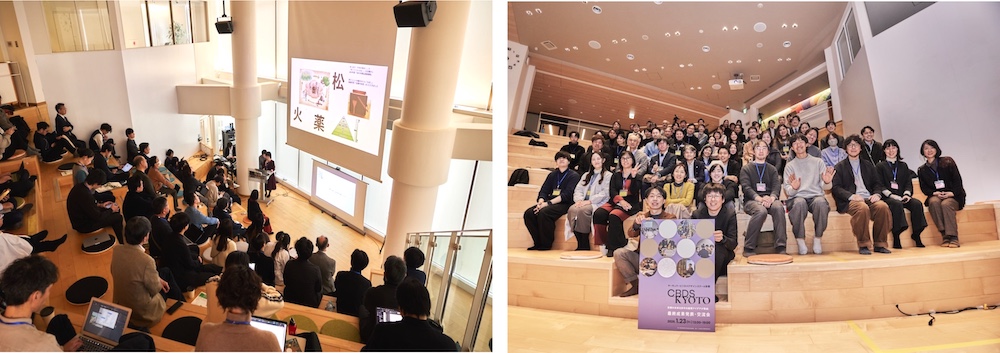
Circular Business Design School Kyoto 2026 so far
In FY2026, the program has delivered the Basic Course (three sessions), the Circular Gathering Kyoto networking event, the Advanced Course (three sessions), and the Circular Business Acceleration Program.
Basic Course
Session 1: Circular economy fundamentals lecture, “The cutting edge of the circular economy and Kyoto’s potential”
Participants learned about the latest trends and leading examples in Japan and abroad, as well as the circular wisdom rooted in Kyoto’s traditions and culture, and considered the potential of circular business.
Session 2: Kyoto’s traditions and culture × circular design workshop, “Thinking about circular business ideas”
Participants revisited the circular wisdom rooted in Kyoto from the perspective of circular design and explored new business ideas using card-based tools.
Session 3: Fieldwork in Kyoto, “Learning from Kyoto’s circular practices in the city”
Participants visited businesses and sites in Kyoto that are putting circular initiatives into practice, and looked for ideas for launching circular businesses through on-site learning.
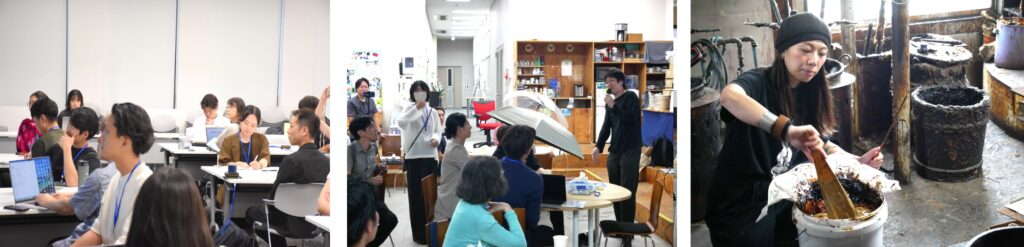
Networking event
“Circular Gathering Kyoto: Envisioning a circular Kyoto, drawing on 1,200 years of wisdom”
The event featured a panel discussion on Kyoto’s traditions, culture and local circular practices, followed by a workshop in which participants interacted using a map of Kyoto’s circular activities. Participants from companies, universities and support organizations came together and built connections that can lead to co-creating circular businesses.
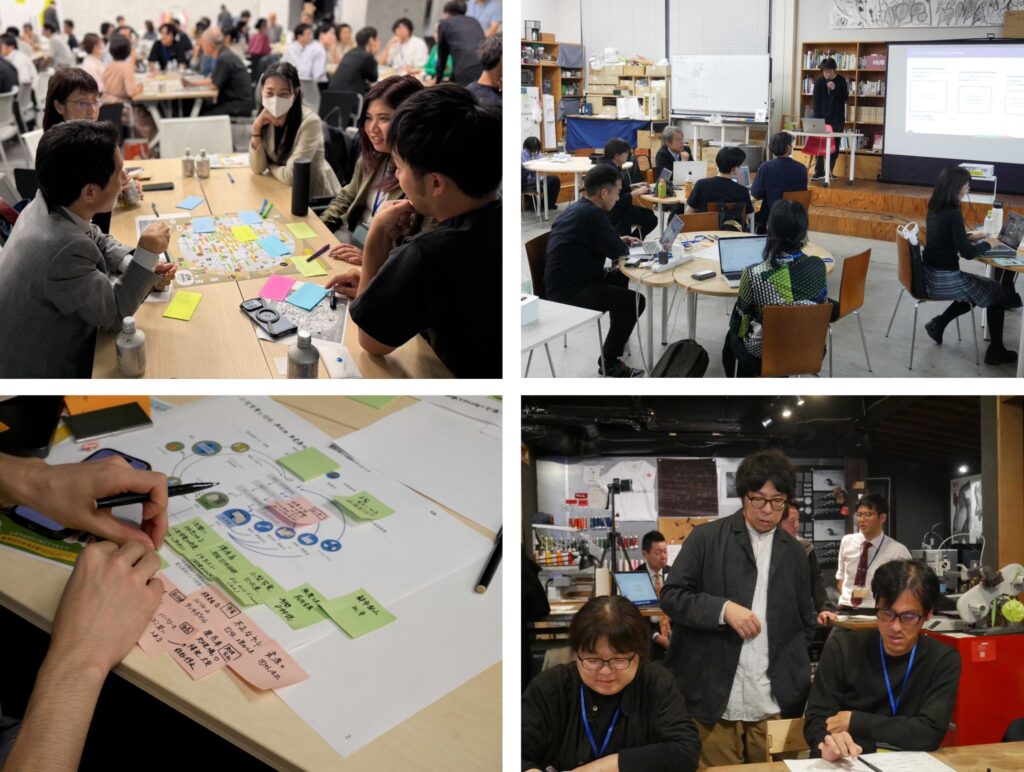
Advanced Course
Session 1: Circular systems design workshop, “Mapping the circular ecosystem you envision”
Participants learned circular systems design, an approach essential to the transition to a circular economy, and created circular diagrams that visualize the resources and stakeholders surrounding their businesses.
Session 2: Circular business design workshop, “Applying circular economy principles to business models”
Participants learned how to apply circular economy principles to their own business models and developed circular business model canvases.
Session 3: Circular product and service design workshop, “Visualizing solutions through prototyping”
Participants learned design methods for circular products and services and practiced rapid prototyping to give their ideas concrete form. Experts in both product and service design were invited to support prototyping tailored to each participant’s business concept.
Event details and registration
Event details and registration: https://cbdskyoto2026-demoday.peatix.com/ (in Japanese)
Related site: Circular Business Design School Kyoto (in Japanese)
Related article: Report on the FY2025 final presentation of Circular Business Design School Kyoto (in Japanese)
Circular Economy Hub, operated by Artiql, has rebranded “Circular X,” its monthly online learning program running since 2021 that explores how the circular economy might expand across industries and fields, as “Refuturing.” The series continues every month as a space for dialogue on reimagining the future.
The theme for November is “What does a distinctly Asian approach to circularity look like? Convivial circular design in practice, seen through Japanese and Indonesian architectural cultures.”
What does a distinctly Asian approach to circularity look like? Convivial circular design in practice, seen through Japanese and Indonesian architectural cultures
The circular economy has spread mainly from Europe and is now taking root widely in Japan as well. In Europe, a range of frameworks and principles has been developed to put this new socioeconomic system into practice. Among them is the butterfly diagram, drawn up by the Ellen MacArthur Foundation and based on the Cradle to Cradle concept. It separates the biological cycle, in which materials return to the soil, from the technical cycle, which keeps finite technical materials such as petroleum and metals in circulation.
Can these frameworks and principles be applied as they are in a region like Japan, whose climate, culture, and history differ from Europe’s? What natural conditions and cultural assumptions, often held unconsciously, underlie concepts developed elsewhere? While learning from leading European practice, how can we envision a circular future that is distinctively Japanese and Asian?
The November session features Genki Unno of Takenaka Corporation, who works on research and practice in circular design and circular architecture in the company’s design department. Comparing architectural cultures in Europe and Asia (Japan and Indonesia), the session will explore the potential of circular design suited to Japan.
It will cover Takenaka’s circular architecture initiatives, which Unno and his colleagues are driving, along with insights from their visit to Indonesia in 2026. Drawing on case studies, the session will examine concrete methods of place-based circular design that fosters a convivial relationship between people and nature. If you are interested in how to realize circularity that is distinctively Asian and Japanese in business and urban development, beyond ideas and philosophy, we invite you to join.
Speakers: Genki Unno (Takenaka Corporation) and Yu Kato (Founder, IDEAS FOR GOOD / CEO, Artiql Inc.). The session will take place online on Thursday, November 26, from 19:00 to 21:00 JST, and will be conducted in Japanese.
Topics for the session
- Takenaka’s “Circular Model 2050” and “Circular Design-Build®” (both in Japanese)
- Differences in architectural styles between Europe and Asia (Japan and Indonesia)
- A culture of stone and a culture of biomass
- Revisiting the butterfly diagram from a cultural perspective
- Curbing entropy and harvesting value through cycles in the biosphere
- Will modular design for circular systems raise the value of cities?
- Designing for redundancy, and a democratic circular economy driven by local communities
- Convivial technology and designing building lifespans
* This event is linked to two articles in IDEAS FOR GOOD, a sister publication of Circular Economy Hub. Both articles are in Japanese. We recommend reading them beforehand (see the related articles below).
Keywords related to this event
This event will be of particular interest to those following these themes.
#Circular design #Architecture #Culture #Design #Urban development #Cities #Butterfly diagram #Biomass #Bamboo #Timber #Japan #Indonesia #Conviviality #Vernacular #Local communities #Community #Citizen participation
About the Refuturing event series
A monthly event series developed by Circular Economy Hub. The series invites thought leaders and practitioners who are driving the transition toward a sustainable circular future, exploring new ways of circular design that question linear growth narratives from diverse perspectives and reweave relationships between humans and nature, as well as between the present and the future.
* What is Refuturing? Climate change, conflict, and other intertwined crises are compounding into a polycrisis, and existing economic and social systems, institutions, and values are taking a sustainable future away from us, a condition described as “Defuturing.” Refuturing refers to a way of thinking and practice that questions these systems, institutions, and values at their foundations, repairs relationships between people and the world, and reconstructs alternative futures that might have been, or more desirable ones.
Organizer: Circular Economy Hub
Circular Economy Hub is a specialist media and platform dedicated to the circular economy, operated by Artiql. It provides the latest trends, case studies, insights, events, and workshops related to the circular economy both in Japan and globally. Drawing on the expertise of its editorial team in Japan and around the world, along with its networks and hands-on experience, it supports companies and municipalities in advancing circular design, circular business, and the transition to circular cities.
URL: https://cehub.jp/en/
Support for circular city transition for municipalities by Circular Economy Hub
- Circular City Transition Guide (in Japanese)
- Circular City Transition Index (in Japanese)
Event details and registration
Event details and registration: https://refuturing10.peatix.com/ (in Japanese)
Related articles (IDEAS FOR GOOD, in Japanese):
- Part 1: Architecture as an urban mine: Takenaka’s vision of the future of circular architecture, “Circular Model 2050”
- Part 2: Redundancy democratizes circularity: what does Takenaka envision for a distinctly Asian circular architecture?
On the evening of Friday, November 27, 2026 (Black Friday), Sta.R (Station R) will host a screening of the documentary “The Repair Cafe,” followed by a talk. Sta.R is a circular culture creation hub at Hoshikawa Station in Yokohama, operated by Artiql together with Route Design. The event will be held in Japanese.
Repair cafés, which began in the Netherlands, have spread around the world. At these community events, volunteers repair broken items that visitors bring in, generally free of charge. “The Repair Cafe” is a documentary that follows the visitors who bring in broken appliances and clothing, and the volunteers who fix them, in Amsterdam, where the movement began.
Rethinking repair on Black Friday
Black Friday is a day of big sales. At Sta.R, we want to spend this evening asking whether we could repair and keep using what we already own before buying something new. When something breaks, is replacing it the only option? Through the film and a talk with a local toy-repair group, we invite you to think it through together.
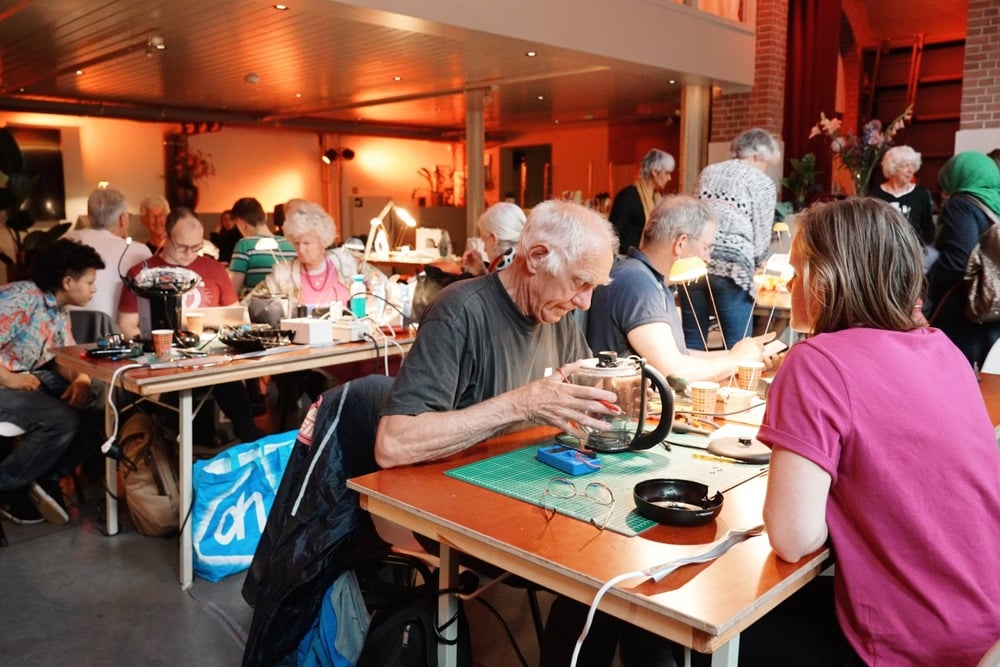
Guests from a local “toy hospital” in Hodogaya
After the screening, we will be joined by the leader and deputy leader of Hodogaya Omocha Saiseikan (in Japanese), a group that runs a “toy hospital” in Hodogaya Ward, Yokohama, repairing children’s broken toys. A member of Artiql’s staff will moderate the talk.
Since 2011, the group has repaired toys, generally free of charge, at local community care centers and other venues in the ward. When a part is unavailable, they salvage one from donated toys or discarded appliances, and more recently they have 3D-printed replacement parts. We look forward to hearing about their repair know-how and stories from their work.
No repair expertise is needed. Please feel free to join us on your way home from work (registration via Peatix).
About “The Repair Cafe”
“The Repair Cafe” is a 2024 Dutch-Japanese documentary, planned and produced by IDEAS FOR GOOD, the media platform operated by Artiql, with cooperation from Repair Café International. The film runs 30 minutes with Japanese subtitles. See the official website (in Japanese) for details.
About Sta.R
Sta.R (Station R) (in Japanese) is a circular culture creation hub that opened in August 2026 in a commercial complex within Hoshikawa Station on the Sotetsu Main Line. Based on the concept of Creativity, Circularity, and Culture, it features the Material Library, where visitors can discover local waste materials and recycled materials, the Я gallery, which exhibits art on the theme of circularity, and Re:store, which sells local circular goods. It is operated by Creative Circular City Collective, a joint body of Artiql and Route Design LLC, in cooperation with the City of Yokohama and the Sotetsu Group.
Event details and registration
Register on Peatix: https://peatix.com/event/5253280 (in Japanese)
Related site: Circular Yokohama: “A night to rethink repair on Black Friday: The Repair Cafe screening and talk at Sta.R” (in Japanese)
Related article: Our documentary “The Repair Cafe” ranked first in number of screenings in cinemo’s screening ranking for the first half of 2026
Related article: Artiql’s documentary Repair Cafe reaches 16,000 viewers across Japan
Sta.R (Station R), the circular culture creation hub directly connected to Hoshikawa Station in Yokohama and operated by Artiql together with Route Design, will hold “Learning about the circular economy from Ama Town, Oki Islands | connecting the circle vol.0” on November 25. The event explores the circular economy through Ama Town, located in the Oki Islands of Shimane Prefecture.
How can a community make the most of the resources it already has and nurture connections among its people? Using Ama Town as a starting point, the event invites participants to explore sustainable ways of building communities and what a circular future could look like.
Whether you are interested in the circular economy and community building, or simply want to rethink how you relate to resources and people in your daily life and work, you are warmly invited to join.
Rethinking the circular economy at community level through Ama Town, Oki Islands
The Oki Islands lie off the coast of Shimane Prefecture. Ama Town sits on Nakanoshima Island, surrounded by rich nature.
Sustaining a community within limited resources and a limited environment matters not only for islands, but also for the cities and regions where we live.
Recognizing the value of what a community already has. Making the most of connections between people. Passing today’s resources on to the future.
Through Ama Town, the event invites participants to see the circular economy not merely as the reuse or recycling of resources, but as a way of shaping communities and everyday life.
About “connecting the circle vol.0”
This event is titled “connecting the circle vol.0.”
Circularity is not only about the flow of resources and materials. Encounters and relationships between people, as well as culture and knowledge rooted in a place, also hold many possibilities for circular practices.
Sta.R is about creating new value and connections through materials, ideas, and encounters between people.
We hope this event will help participants learn about Ama Town’s initiatives and consider what kinds of circular practices they could start in the communities where they live.
Event details and registration
Event details and registration: https://star20261125.peatix.com/view (in Japanese)
Related site: Sta.R (in Japanese)
Circular Economy Hub, operated by Artiql, will host a free online event on November 20 (15:00 to 16:00 JST, via Zoom) to present the Circular Tool Box, a suite of data tools launched with the site’s September redesign. The session will be held in Japanese.
From regulatory tracking to business case modeling: what the Circular Tool Box offers practitioners
Circular economy laws and policies keep evolving in both Japan and the EU. Practitioners need to know which rules apply to their business and when they take effect, but the information is scattered and takes time to find.
The Circular Tool Box launched alongside the Circular Learning Hub, a library of learning content. The event will walk through the tools on screen, then feature a discussion on practical use between Yu Kato, founder of IDEAS FOR GOOD and CEO of Artiql, and Kiyokazu Nasu, CEO of Circle Design Inc. and editor-in-chief of Circular Economy Hub, with Q&A at the end.
Tools on the agenda (subject to change)
- Tracking Japanese policy: Japan Circular Economy Policy Watcher, which maps Japan’s legislation from the Basic Act down to individual recycling laws, with dates of entry into force and amendments on a timeline
- Tracking EU regulation: EU Circular Economy Policy Watcher, which distinguishes between adoption, entry into force and date of application, and lays out phased obligations chronologically
- Finding partners: Circular Startup Map: Japan, which gives an overview of Japanese circular startups by business model
- Organizing business models: Circular Business Model Canvas, a one-page canvas for describing a circular business model, with a blank template that can also be used in workshops
- Making the business case: Circular Action Business Contribution Analysis, which assesses how circular actions affect revenue, brand, cost and risk
- Modeling the financials: Circular PaaS (product-as-a-service) Revenue Simulator, which estimates the cost of shifting from selling products outright to offering them as a service, and the payback period
- Communicating impact: Circular Impact Assessment, which structures the impact of initiatives using a logic model
Of these tools, only Circular Startup Map: Japan is currently available in English, on the English site Circular Economy Hub Japan. The others are provided in Japanese only.
The event will be recorded, and an archive video is planned for release afterward.
Organizer: Circular Economy Hub
Circular Economy Hub is a Japanese media platform on the circular economy, operated by Artiql. It provides the latest trends, case studies, insights, events and workshops on the circular economy in Japan and around the world, and supports companies and municipalities with circular design, circular business and circular city transition.
URL: https://cehub.jp/en/
Support for circular city transition for municipalities by Circular Economy Hub
- Circular City Transition Guide (https://city.cehub.jp/) (in Japanese)
- Circular City Transition Indicator (https://ccti.cehub.jp/) (in Japanese)
Event details and registration
Event details and registration: https://cehub-202611.peatix.com/ (in Japanese)
Related article: [Circular Economy Hub Japan] Website redesign and new circular economy data tools added
IDEAS FOR GOOD, the media platform we operate to share ideas for a better society, will hold a free online event on November 16. Drawing on the reporting behind our feature “What kind of society does our way of working reproduce?”, our editorial team will share what we saw and heard in the field and talk with participants about how the “norms” of work might be rethought.
What kind of society does our way of working create? Questioning the “norms” of work through practices at organizations around the world
Do we take our daily work for granted? How we are evaluated, how our pay is decided, when and where we work. Whether we work for a company or as freelancers, these everyday norms may be closely tied to the kind of society we live in.
Have you ever tried to change the way you work and hit a wall you could not move on your own? Evaluation, pay, and working hours may seem to be decisions we make ourselves, but they rest on social “norms.”
▶️ Feature: What kind of society does our way of working reproduce? (in Japanese)
Through this feature, we have followed the relationship between work and society. Some people doing “work that makes society better” find themselves worn down without knowing why. In organizations founded to improve society, some people struggle with opaque evaluation. That discomfort may be less a matter of individual shortcomings than a problem of governance: how organizations and society make decisions. The feature began with that question.
In our reporting, we met practitioners in Japan and abroad: Ecosia, the search engine that adopted steward-ownership, a structure under which its profits stay dedicated to its mission and the company cannot be sold; Analyse & Tal, a Danish worker cooperative where everyone works for the same hourly wage; and Pillow, a Japanese company that describes itself as a “non-profit stock company,” building an organization that does not reproduce gender inequality. (All three articles are in Japanese.)
At this event, we will explain why we came to ask about “work” and what we saw and heard in the field.
The session focuses on the “mechanisms” for changing how we work that emerged from our reporting on organizations in Japan and abroad. How can a company where everyone earns the same hourly wage hold together? Why do some companies deliberately limit how profits are distributed? We will unpack the decision-making and ownership structures behind these practices and consider what could change in your own organization. We also hope to share the questions we found along the way, the issues still unresolved, and a look ahead to our next themes.
At the end of the event, we will introduce IDEAS FOR GOOD’s Feature Co-creation Program (in Japanese). We want to turn our features from something to read into a space for developing questions together. We are looking for companies to join us in reporting on and exploring themes together, starting with this feature.
We believe there are questions that articles alone cannot capture or reach, and that they sit in the daily work of companies, municipalities, and other organizations. Partners do not sponsor a finished article. They take part in the process of making the feature itself. Beyond work, we hope to explore themes that grow out of our features on money, mobility, and AI together with outside partners.
Everyone is welcome, whether you are curious about the feature or interested in a new form of collaboration with a media platform.
Who this event is for
- People who want to think about how work connects to society, whether they are employees, freelancers, or sole proprietors
- HR and organizational development professionals who want to rethink compensation, evaluation, ways of working, and decision-making structures
- Corporate planning, new business development, and sustainability professionals who want to explore societal issues as questions for their own company
- People who want to turn societal change into the next questions for their business or organization
- People interested in cases from outside Japan
- Companies looking for a media partner to help communicate and explore their initiatives
Themes we will cover
- Work and society: the organizational structures examined in our feature
- Money and the new economy: how pay and wealth are distributed, an issue inseparable from work
- Democracy: a feature in the works on who gets to take part in decision-making inside a company
Program
- 16:00–16:05: Opening and introduction to IDEAS FOR GOOD
- 16:05–16:35: Why we came to ask about “work,” and what we saw in our reporting
- 16:35–16:50: Conversation: “Changes in companies and society we have seen, and the questions we will need next”
- 16:50–17:00: Introducing the Feature Co-creation Program
- 17:00–17:30: Discussion with participants on how we can rethink what is “normal” about work. Those interested in the Feature Co-creation Program can also talk with editorial team members (breakout rooms planned)
* The schedule may change on the day of the event.
Speakers
- Erika Tomiyama, Editor-in-Chief, IDEAS FOR GOOD
- Natsuki Nakahara, Deputy Editor-in-Chief, IDEAS FOR GOOD
- Hideyuki Arifuku, CEO, Artiql Inc.
Date and time: Monday, November 16, 2026, 16:00–17:30 JST | Online (Zoom) | Free | Capacity: 50 participants
A Zoom link will be sent after registration. A recording of the talk portion will be sent to registered participants afterward, including those who cannot join live.
Registration is now open. Please note that the session will be conducted in Japanese.
▶️ Event details & registration: https://work-and-society-ideas.peatix.com (in Japanese)
Organizer: IDEAS FOR GOOD
IDEAS FOR GOOD is a media platform, operated by Artiql, that shares ideas from around the world for a better society. Artiql combines its media with dialogue and co-creation process design and place-making, supporting the transition to a sustainable society.
URL: https://ideasforgood.jp (in Japanese)